Traffic Patterns
Pattern traffic is a shared geometry problem: aircraft need a workable sequence, a usable runway, and enough room for the next decision.
The legs
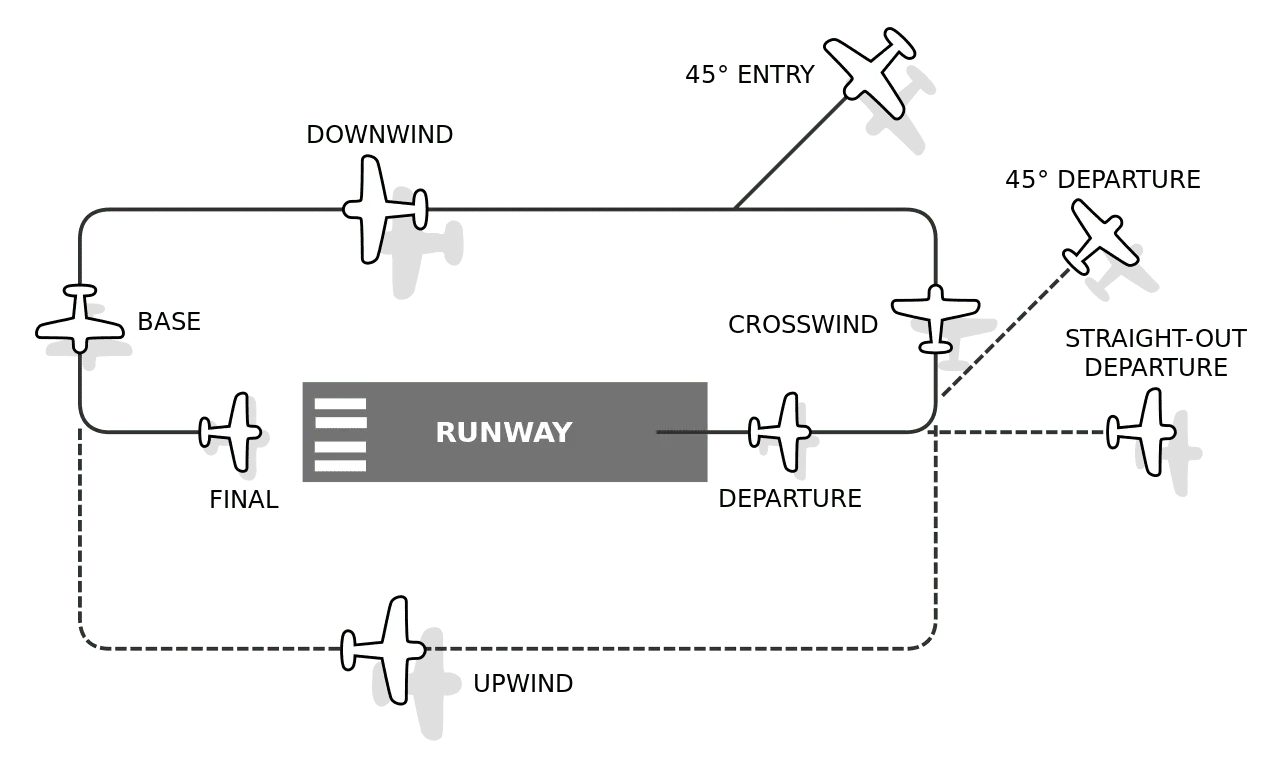
Section titled “The legs”A pattern is a rectangle flown around the runway: upwind (the climb straight out after takeoff), crosswind (the turn off that climb), downwind (parallel to the runway, opposite direction of landing), base (the turn back toward the runway), and final (lined up, descending to land).
Joining the pattern
Section titled “Joining the pattern”Aircraft can enter on a left or right downwind, a left or right base, or come straight in on final, depending on the active runway and which side its pattern normally flies. The airport view will show which entries make sense for the runway in use; not every option is a good one just because it’s offered.
Extend Downwind
Section titled “Extend Downwind”Extend downwind tells an aircraft already on downwind to keep flying it past the point it would normally turn base. It’s a spacing tool: buy room behind traffic that’s ahead of it on final, or behind an aircraft still working the runway, without sending the extended aircraft somewhere new. It stays on downwind, straight and level, until you issue Turn Base - so don’t extend an aircraft and then forget about it; someone still has to bring it back around.